Knowing Your Railroads’ Business Model
Why Rail Shippers Keep Getting Rate Increases While Competitor Rates Are Falling
For most rail shippers, negotiations with the railroads feel one-sided.
The railroad shows up with a rate increase and a list of reasons why it’s justified:
-
Costs are up
-
Network pressure exists
-
Market conditions have changed
And because most shippers only see their own rates, they accept the increase.
But what if your competitors’ rates were actually going down at the exact same time?
That changes everything.
The Problem With Negotiating Blind
Railroads have visibility into the entire market.
Most shippers do not.
That imbalance creates a major advantage for the railroad during negotiations. While you may only know what is happening inside your four walls, the railroad knows:
- What competing shippers are paying
- Which commodities are seeing downward pricing pressure
- Where volumes are increasing
- Which markets are becoming more competitive
Without market visibility, many rail shippers end up negotiating from a defensive position instead of a strategic one.
That is exactly why RCC was created!
What the Railroad Business Model Reveals
One of the most important tools in rail negotiations is understanding the railroad’s business model for your commodity.
When you analyze:
- Commodity trends
- Revenue changes
- Revenue per car
- Carload growth
- Quarterly movement over time
you begin to see what is actually happening in the market.
And sometimes, the story is very different from what the railroad is telling you.
Example: Plastics on the UP System
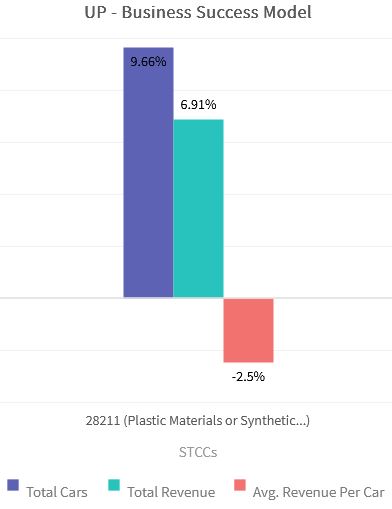
From Q1 2024 through Q4 2025:
-
- Carloads increased 9.6%
- Revenue increased 6.9%
- Revenue per car decreased 2.5%
What does that mean?
The railroad lowered pricing enough to stimulate volume growth while still increasing overall revenue.
That is a strong business model for the railroad.
But it also raises an important question:
If the railroad is lowering rates across the market to grow volume, why should your rates be increasing?
–
The Real Issue Isn’t the Market
When competitor rates are dropping while your rates are climbing, the issue usually is not:
- Fuel costs
- Network congestion
- Market conditions
The issue is your position in the negotiation.
Railroads thrive on limited transparency. Most shippers never discover they are paying above-market pricing because they cannot see the broader market movement around them.
That is where leverage comes from.
How Market Visibility Changes Negotiations
Most shippers walk into negotiations saying:
“Can you lower our rates?”
That approach puts the railroad in control.
But when you have market visibility, the conversation changes completely.
Instead, you can walk in saying:
“We’re seeing downward pricing movement across this commodity on your network. We need a 4% reduction across our rate structure to remain competitive.”
That statement is backed by market intelligence.
And railroads respond differently when they know you understand what is happening beyond your own rates.
The Power Shift Happens Fast
The moment you understand:
- How your rates compare to the market
- Whether competitor rates are rising or falling
- How profitable your traffic is to the railroad
- How operating conditions are changing
the negotiation dynamic changes.
Because once you know what is happening outside your four walls, it becomes much harder to overcharge you.
Data Alone Is Not Enough
Having data is important.
Using it correctly is what reduces rates.
There is no magic pill in rail negotiations. But there is a framework that consistently creates leverage.
It is the 3Rs:
-
The Rate You Need
Define the pricing outcome required to stay competitive.
-
The Reason You Need It
Use market trends, business models, and benchmarking data to justify the request.
-
The Reason the Railroad Should Give It to You
Show the railroad why supporting your business benefits them long-term.
The 3Rs create the story behind the negotiation.
And railroads respond to strong stories backed by market evidence.
What RCC Helps You See
With RCC, shippers can instantly identify:
- How competitor pricing is changing
- How profitable their traffic is to the railroad
- Industry benchmark rates
- Reasonable benchmark pricing for movements
- Railroad operating expense trends
- Commodity business models across the network
- Market positioning compared to peers
That visibility gives shippers leverage they simply do not have otherwise.
Final Thought
Most rail shippers are not overpaying because they negotiate poorly.
They are overpaying because they negotiate without visibility.
When you understand how the railroad is pricing your commodity across the network, you stop reacting to rate increases and start negotiating strategically.
And that is when the balance of power begins to shift back to the shipper.