How to Stop Your Rail Rates from Always Increasing
Over the last 20 years railroad profits have soared. Illustration 1 shows that constant dollar rail profit:
-
Increased 314% since 2004, however
-
Prior to 2004 it fluctuated up and down but cumulatively had little change
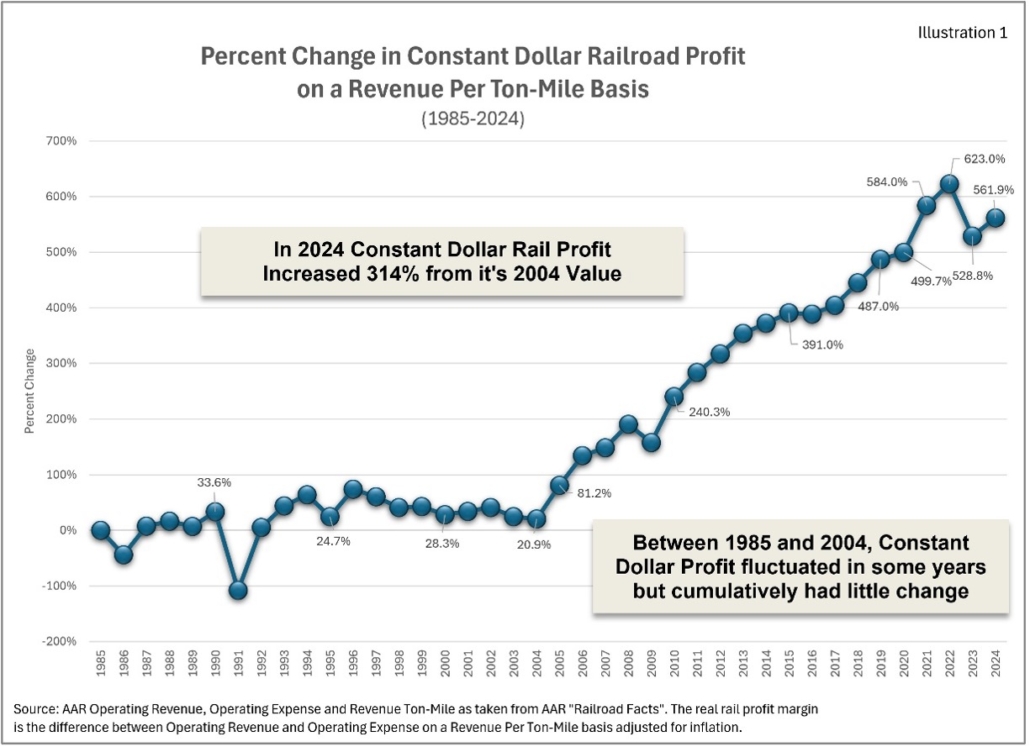
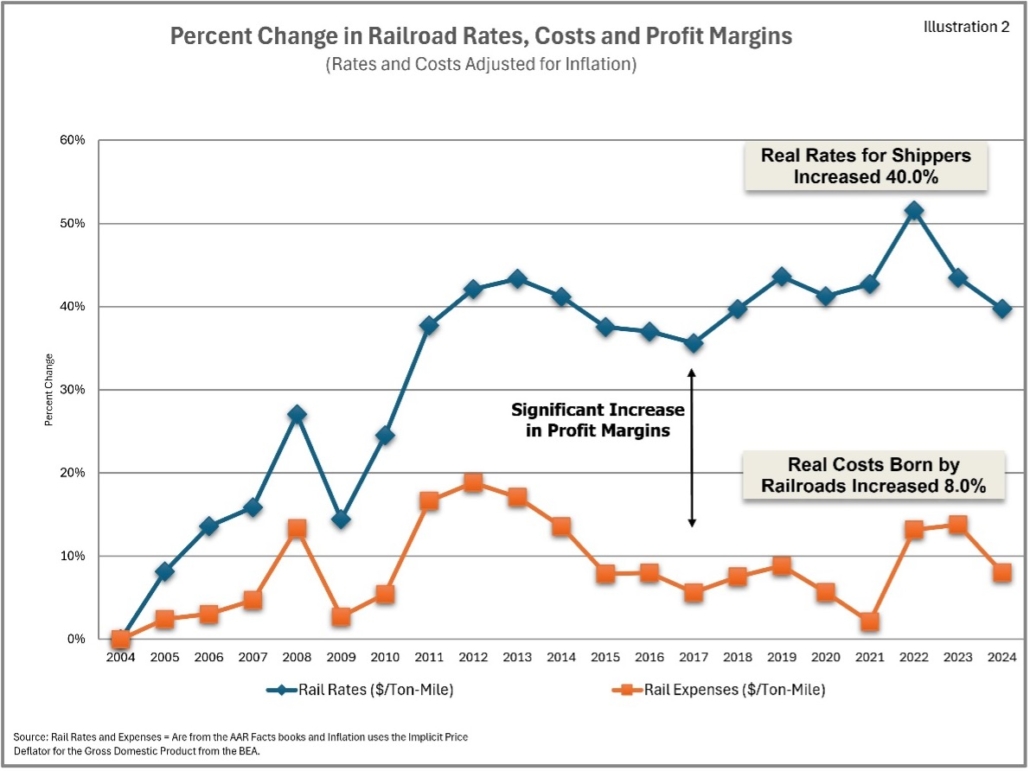
Illustration 2 shows that rail profit soared after 2004 because constant dollar rail rates increased 32% more than costs (40% VS 8%).
Rates not adjusted for inflation increased a much larger 122% since 2004 representing more than a 6% increase per year. The magnitude of these increases is not reasonable and demonstrates that shippers could use help in controlling rail expenses.
To understand what reasonable rates and rate changes are for moves it’s important to have access to railroads submittals to both the STB and SEC.
To explain some of the benefits of this information, I will use:
- An (ethanol) movement (STCC 28184) going from Des Moines IA to Houston TX
- New rates are being negotiated to replace a 3-year contract with UP which ends in December 2026
- Rates increased 10% over the last 3 years in the existing contract
- UP has proposed a 4% rate increase in the new contract
The question – Is a 4% rate increase reasonable?
The answer is NO! REASON
UP’s submittals to The STB and SEC over the last 3 years show rates should decrease and not increase.
-
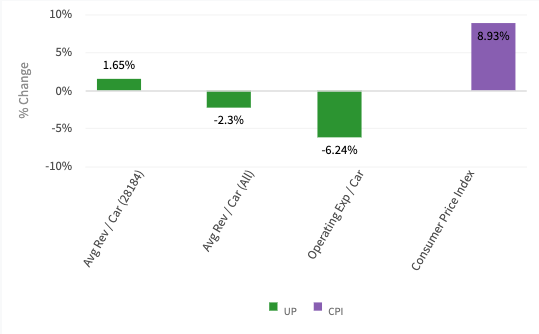
UP’s average operating expense per car decreased 6.2% over last 3 years
- When a railroad’s costs decrease over the life of a contract, the original rate becomes more profitable to the railroad than it was when the contract was first negotiated.
- In other words, because costs decreased all of The 10% increase in the 3 year contract represents additional profit for the railroad.
-
The average revenue per car for all UP commodities decreased 2.3%
- When determining what a reasonable rate change is, you always want to know the average rate change for all of a railroads moves. If a negative rate change is good for all railroad traffic. It can also be good for your traffic.
-
Average rate change for UP Ethanol moves (STCC 28184) only increased 1.7% over 3 years
- Once I find that my rates increased 10% when my competitors rates had little change, I am no longer looking to control rate increases. I need rate decreases to stay competitive in my markets, and I have backup to support my position
-
The Consumer Price Index increased 8.9%
- This is the type of support the railroad will use to support a 4% rate increase. It is very distant from the change in railroads cost, rates and what is reasonable for your moves
Shippers need essential information on railroads to negotiate better rates and escalation provisions with railroads.
The Rail Cost Control Program (RCC) makes it very easy to get the rail intelligence you need to negotiate better with railroads. For example, when you cost a move in the RCC you don’t just get the railroads cost of the move. You get a dashboard that provides numerous types of intelligence related to the move. Some things included in the output:
- Mapping of alternate routes for your move
- Suggested rate for the move
- How your rate stacks up to competitors in your market
- The type of data included in the bar chart just reviewed
- The profit railroads make from your move versus competitors
- The results of your railroads business model for your commodity and
- Much Much More
Part of the reason for the large 122% increase in rail rates since 2004 is that shippers didn’t have access to the intelligence they needed to properly counter railroads position on rates. The RCC now makes it easy (under 60 seconds) to obtain the information you need to obtain more reasonable rates for your movements.