• Solutions
    • AXIS
    • Rail Rate Checker
    • Cost Optimizer
    • DMS
  • Company
    • About Us
    • Contact Us
  • News & Events
  • Seminars and Training
  • Login
  • Start Your Free Trial
  • Schedule Call
  • Menu Menu

Archive for category: Uncategorized

close up view of railroad tracks at dusk

Decrease Your Rail Rates by Increasing Your Pricing Options

January 13, 2021

Rail shippers all agree that it is better to have multiple rate options for a movement instead of just one.

The easiest way to increase your rate options is to have railroads provide Rule 11 rates through multiple gateways. 

The following bar chart provides an example of the potential reduction in rail expenses a shipper can obtain from using a Multiple Rail Gateway Request for Proposal (RFP) on Rule 11 moves.  Each bar represents the percent change from existing rates using a Multiple Gateway RFP and a RFP based on existing rail routes for captive and competitive moves.
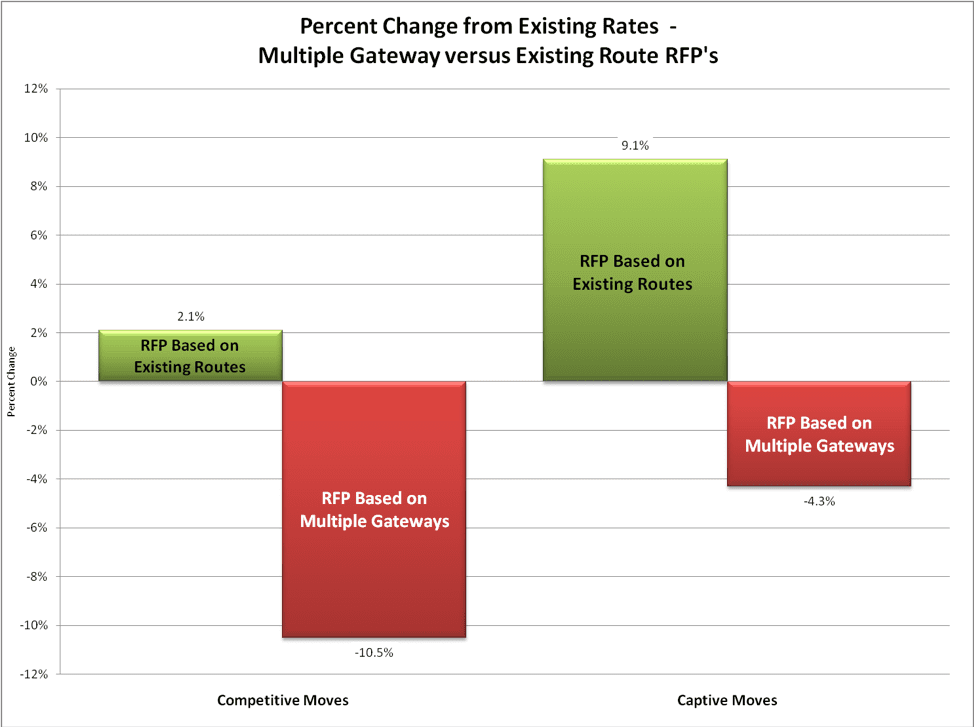


The bars reflect an analysis of actual results from bid evaluations. The chart shows a reduction occurs in both captive and competitive rail expenses when Multiple Gateway RFP’s are used, but rate decreases are much larger on competitive movements.

Results normally vary based upon a shipper’s volume of captive and competitive traffic. However, having three rate options instead of one creates downward pressure on rates for both captive and competitive moves that simply doesn’t exist without this functionality.

The problem with Multiple Gateway RFP’s is: they have been very difficult to create and evaluate.

Fortunately, that has changed! Multiple Gateway RFP’s are being used by more shippers as improved technology now makes it easier to create and evaluate them.

In the past, to create a Multiple Gateway RFP you needed to know the following for each movement:

  • The railroads serving your origin
  • The railroads serving your destination
  • The major gateways where the origin and destination railroads interchange traffic to the destination area

The flow chart below is for the creation of a Multiple Gateway RFP for an NS move. This move is originating in Knoxville, TN and terminating on either the UP or BNSF railroads in Los Angeles, CA.
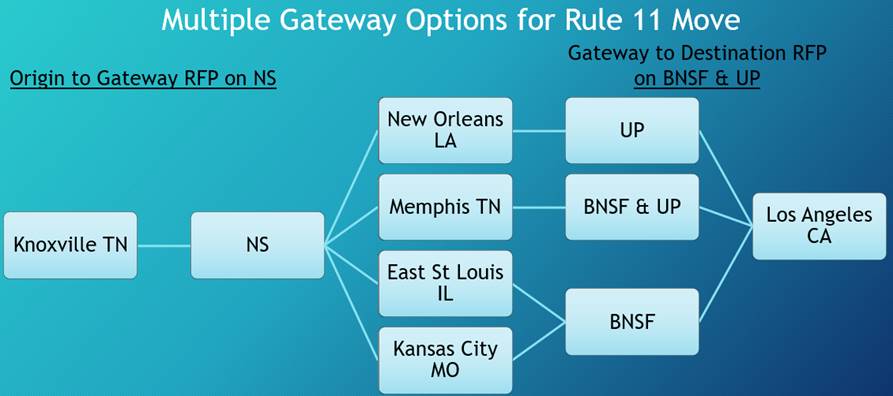
 

Multiple Gateway Railroad RFP


The flow chart shows that the shipper’s RFP’s for NS, UP and BNSF must include a request for nine (9) rates from the three railroads for this one movement:

  • NS RFP needs four (4) rates from Knoxville, TN to major gateways with UP and BNSF
  • BNSF RFP needs three (3) rates from the gateways on BNSF to the Los Angeles destination
  • UP RFP needs two (2) rates from the gateways on UP to the Los Angeles destination

If a shipper has hundreds of moves, in the past, the RFP could take months to assemble for all railroads.

The bid evaluation was also more complex. This slowed down the bid evaluation process at a time when contracts were ending and time was critical.

Significant cost reductions normally result from a Multiple Gateway RFP, but this process was always significantly more time consuming. This has changed!

The Rail Cost Control (RCC) program represents a significant improvement in technology that makes it easy to create and evaluate Multiple Gateway RFP’s. To do this, shipper’s moves are loaded into the program’s Database Management System. Then, the program’s Cost Optimizer automatically generates Multiple Gateway RFP’s for all movements on each railroad through commonly used gateways. The RCC creates the RFP so it automatically reads railroad responses to the RFP.

The Rail Cost Optimizer then automatically:

  • Evaluates all railroad’s responses and determines your least cost routing option and awards traffic to that option;
  • Creates win/win optimizing opportunities that decrease your cost, while increasing railroads profits; and,
  • Creates cost effective counter proposals for your railroads.

The Rail Cost Control program is an Escalation Consultants product that represents a significant improvement in technology. The RCC has a material impact on a shipper’s rail expenses.


Rail Cost Control (“RCC”) is a program developed by Escalation Consultants to help shippers reduce rail expenses by managing costs and empowering negotiations. For more information about RCC and other related articles, visit the RCC Blog.
Rail Rate Checker Banner

https://www.railcostcontrol.com/wp-content/uploads/contact-background-e1602553990663.jpg 644 1800 ACS Admin https://www.railcostcontrol.com/wp-content/uploads/RCC-Logo-2026.svg ACS Admin2021-01-13 10:00:342021-06-01 13:57:43Decrease Your Rail Rates by Increasing Your Pricing Options
rail yard at night under lights

Railroads Cost Decrease Significantly in 2020

January 6, 2021

Railroads Cost Decrease Significantly in 2020 – Far Reaching Affects

Freight expenses of the four major U.S. Class 1 railroads decreased an average of 9% over the first three quarters of 2020.

This drop in the cost per car for railroads moving traffic is impacting many shippers’ rail negotiations and the rates for their movements.

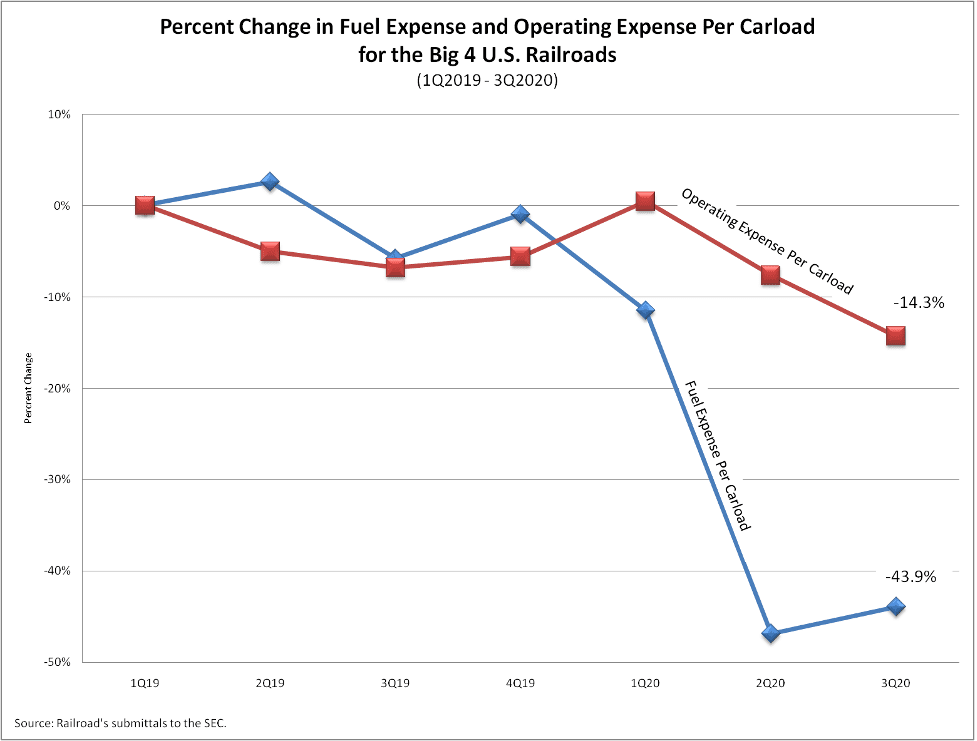
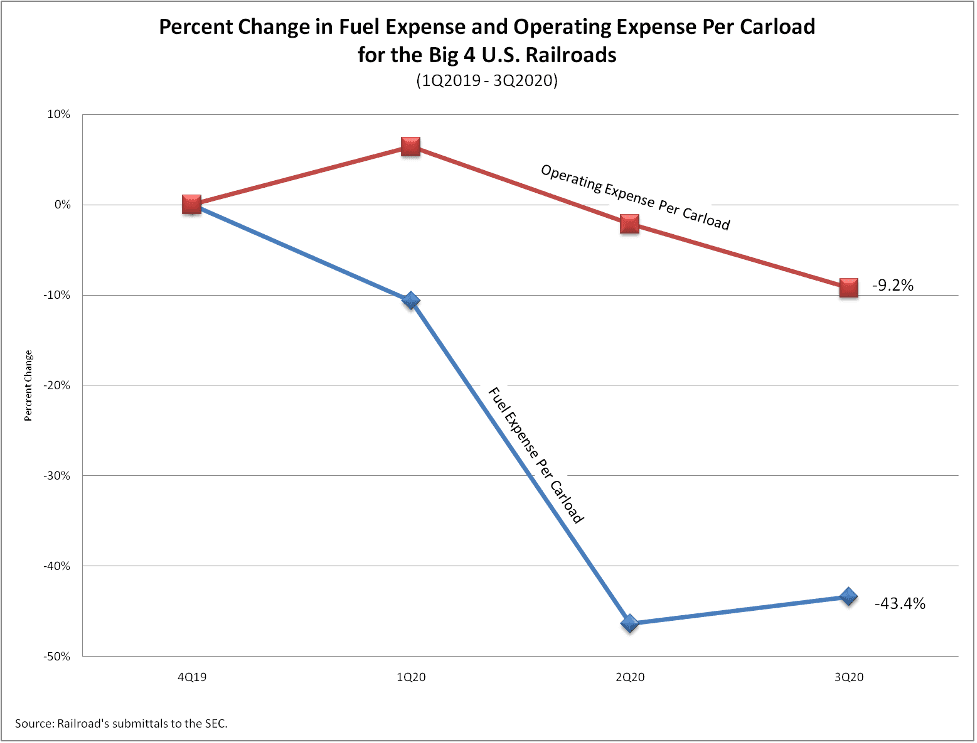
Fuel costs are the primary driver for the decrease in railroad expenses. The following graph shows that the average cost of fuel per car decreased 43% on the major U.S. railroads since the fourth quarter of 2019. This has been a major contributor to the 9% decrease in overall freight expense.

Railroad Costs Decrease Significantly in 2020

Costs Need to Take Center Stage in Negotiations with Railroads

When a railroad’s cost is decreasing, it is harder to justify an increase in rates. As a result, railroad’s cost of moving traffic is taking on more importance in many shippers’ preparations for negotiations. This issue is helping many shippers reduce the level of their rate increases. Thus improving their ability to obtain rate reductions on more traffic.

Rail Rate Checker (RRC) users are encouraged to use the SEC section of the program to see how your railroad’s cost of moving traffic is changing. This will quickly keep you up to date on the macro changes in cost, revenue and carloads on your railroads. Companies that do not have RRC should research the railroad’s filings to the Security and Exchange Commission (SEC) to keep current on this issue.

Rail Rates That Are Unreasonable Can Look Reasonable Without Taking Action

Most rail shippers calculate the railroad’s cost and Revenue to Variable Cost Ratio’s (RVCs) for their movements to help determine reasonable rates for their traffic. In doing this, shipper’s need to be aware that they must escalate the railroad’s cost to make them more current. If this is not done, the railroad’s cost for movements will be overstated and the RVC for movements will be understated. This will lead to faulty conclusions and improper rates for a shipper’s movements.

The most current costs submitted by railroads to the Surface Transportation Board are for the year 2019. The graph below tracks the average change in the four major U.S. railroads operating expense and fuel expense per car from the 1st Quarter of 2019. The graph shows that most of the cost decrease did not occur until 2020. This means that railroad’s 2019 costs will need to be escalated (actually de-escalated) in order to generate accurate results.

Railroad Fuel Expenses Decrease Significantly in 2020

To generate accurate railroad costs for movements, Rail Rate Checker users need to make sure they use the “Escalate Cost” button when costing movements.

This will automatically escalate the railroad’s cost of your moves to the current quarter. Companies that do not have Rail Rate Checker will need to establish a process for adjusting their cost results.


Rail Rate Checker is part of the Rail Cost Control (“RCC”) system developed by Escalation Consultants to help shippers reduce rail expenses by managing costs and empowering negotiations. For more information about RCC and other related articles, visit the RCC Blog.”

Database Management System

https://www.railcostcontrol.com/wp-content/uploads/img_weekly_rail_carloads.jpg 500 700 Keith Nestman https://www.railcostcontrol.com/wp-content/uploads/RCC-Logo-2026.svg Keith Nestman2021-01-06 15:00:552021-06-01 14:01:54Railroads Cost Decrease Significantly in 2020
analytical data chart and graph

Most Rail Rates Increase Less Than 2% Annually

December 16, 2020

Longer term rail contracts are now the norm. The question is:

What level of rate increase should a shipper agree to in a long-term rail contract?

The graph below ultimately answers this question.

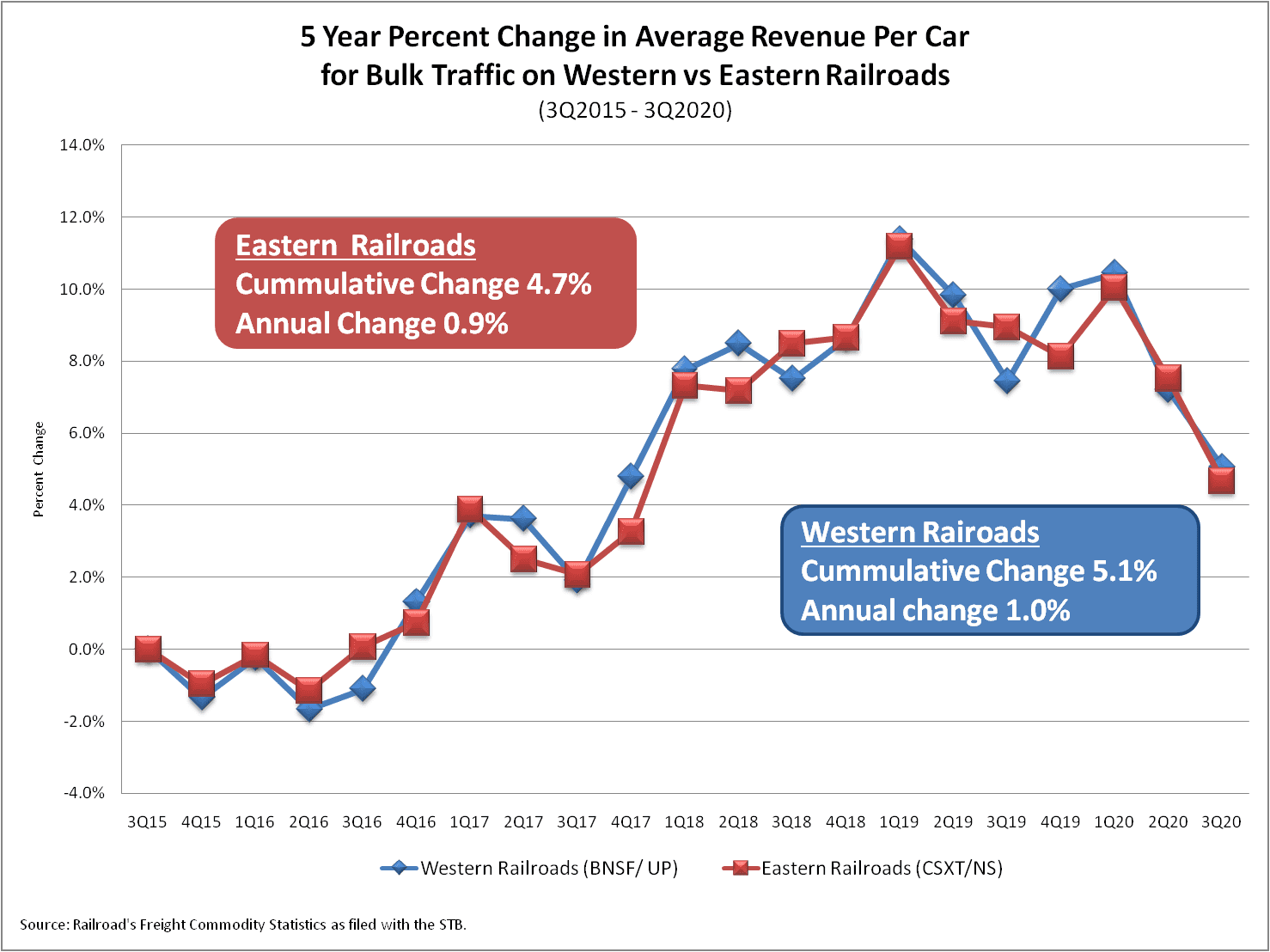
This graph shows that over the last 5 years rail rates for bulk rail movements had a cumulative increase of 5.1% on Western U.S. railroads, and 4.7% on Eastern U.S. railroads. This represents an average annual increase of 1.0% on Western U.S. railroads, and 0.9% on Eastern U.S. railroads.

Average Revenue Per Car for Bulk Rail TrafficBased on historical changes, a contract escalation rate greater than 2% puts a shipper at a competitive disadvantage in its markets. 

The graph above shows that the average rate per carload for bulk rail traffic been increasing less than 2% annually. In addition, bulk rail freight rates have plummeted in 2020, causing more shippers to reconsider the proper term for their contracts. Shorter term agreements, which take advantage of weakness in rail markets are being considered. 

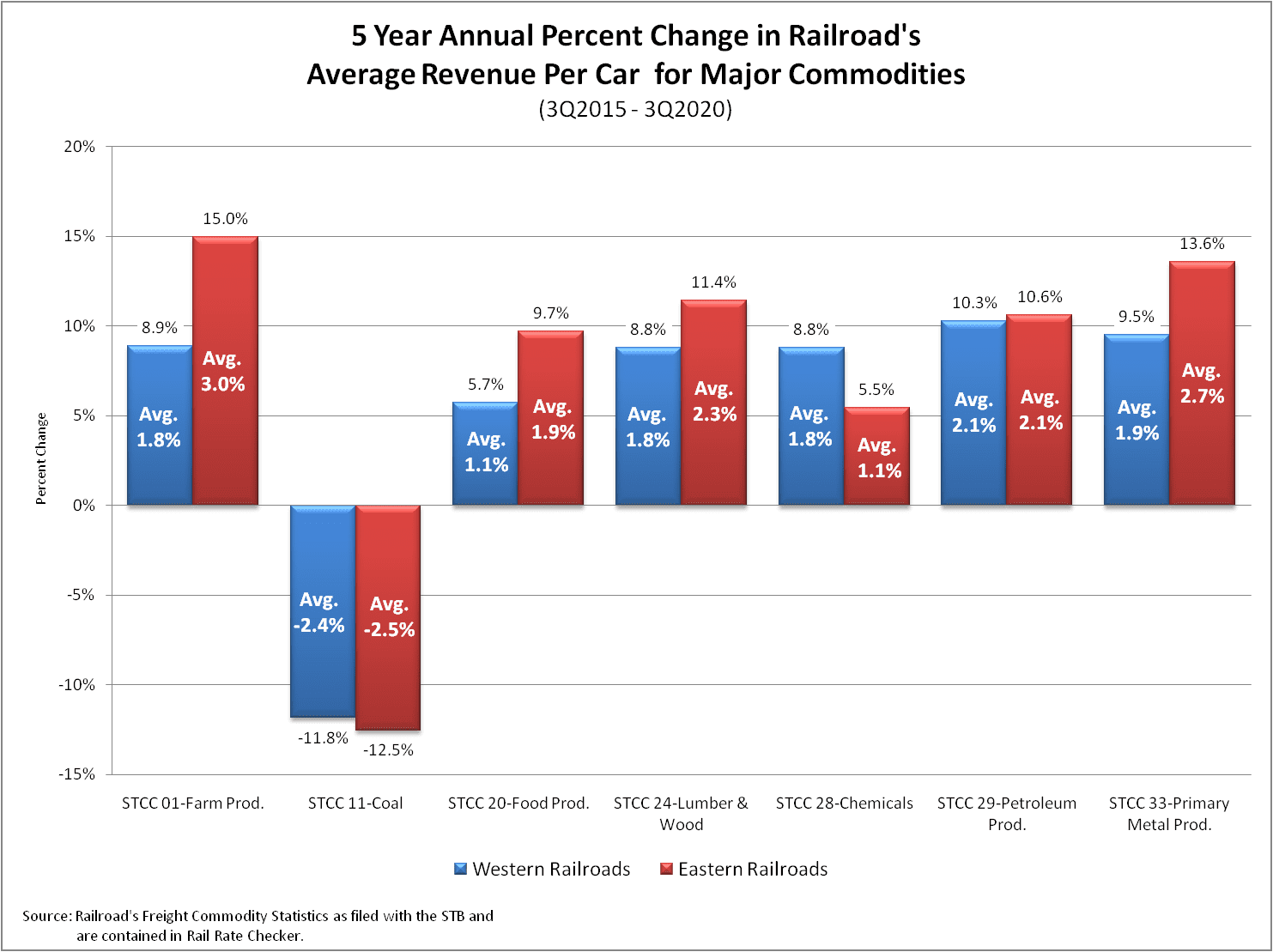
The graph below provides the 5 year trailing average rate of change for rail movements at the 2-digit STCC level for Eastern and Western railroads. Of the 14 rate changes in this graph, five (36%) increased more than 2% annually. While, only one (Farm Products) had an annual increase as high as 3%.

Annual Percent Change in Railroad's Average Revenue per Car

Due to the monopoly power that railroads have over many of their customer movements, they are required to submit a large amount of rate and volume information to the STB. Shippers need to access this data in order to be more proactive in rate negotiations with railroads.

Railroads rates and rate changes, down to the 5-digit STCC Code, are contained in Rail Rate Checker which is part of the Rail Cost Control system.


Rail Cost Control (“RCC”) is a program developed by Escalation Consultants to help shippers reduce rail expenses by managing costs and empowering negotiations. For more information about RCC and other related articles, visit the RCC Blog.
Rail Cost Control

https://www.railcostcontrol.com/wp-content/uploads/img_versus_competitors.jpg 851 1800 Keith Nestman https://www.railcostcontrol.com/wp-content/uploads/RCC-Logo-2026.svg Keith Nestman2020-12-16 14:39:032021-06-01 14:02:55Most Rail Rates Increase Less Than 2% Annually
Page 7 of 7«‹567

Pages

  • About Us
  • AXIS
  • Contact Us
  • Cost Optimizer
  • Costing Dashboard Update
  • Database Management System
  • Evaluation Exercise Calendly
  • Evaluation Exercise Contact Form
  • Home
  • Landing Page – 2025
  • Movement Evaluation Exercise
  • News & Events
  • PopUp Testing 05172021
  • Privacy Policy
  • Rail Cost Control Demo
  • Rail Rate Checker
  • Seminars and Training
  • YT

Categories

  • Uncategorized

Archive

  • August 2026
  • June 2026
  • May 2026
  • March 2026
  • February 2026
  • January 2026
  • December 2025
  • November 2025
  • October 2025
  • September 2025
  • June 2025
  • November 2024
  • October 2024
  • June 2024
  • February 2024
  • September 2023
  • August 2023
  • July 2023
  • June 2023
  • February 2023
  • January 2023
  • June 2022
  • February 2022
  • January 2022
  • December 2021
  • October 2021
  • August 2021
  • July 2021
  • June 2021
  • May 2021
  • April 2021
  • March 2021
  • February 2021
  • January 2021
  • December 2020

Rail Cost Control is a product of Escalation Consultants, Inc.—serving railroad customers since 1979.

Quick Links

  • AXIS
  • Rail Rate Checker
  • Cost Optimizer
  • Database Management System
  • News & Events
  • Seminars & Training
  • About Us
  • Contact Us
  • Login

Contact Info

4 Professional Drive, Suite 129
Gaithersburg, MD 20879

info@railcostcontrol.com
301-977-7459 

linkedinfacebook

© 2025 Rail Cost Control. All Rights Reserved.

Scroll to top

Access FREE Trial to Rail Cost Control and Uncover Savings in Seconds